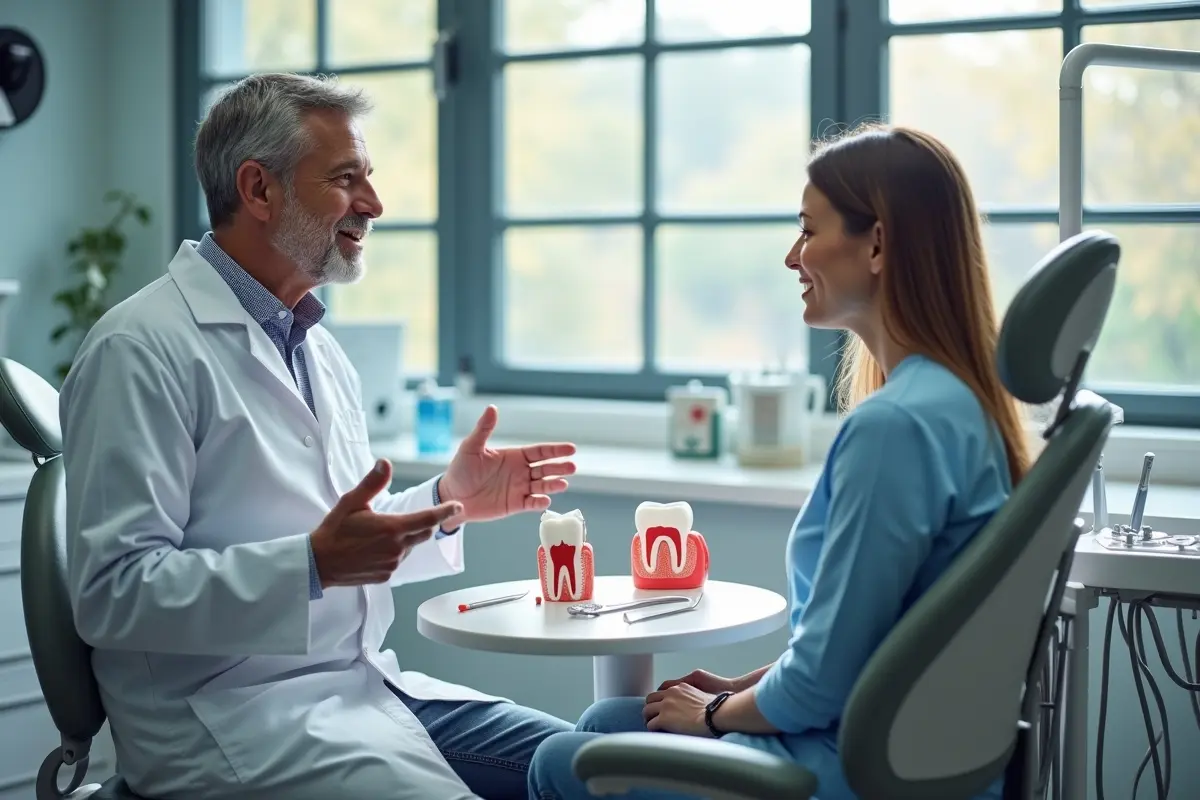
Not every appointment’s the same. Some get you in/out, clean the teeth, take a look and goodbye until six months. Others take their time, explore your mouth and educate you about what’s really going on in there. Basically all the same steps are taken—but what is actually provided to you is vastly different.
A quick, clean appointment treats dentistry like a factory—sure it’s efficient—but it’s surface level. Real care is not just scraping and polishing but a true assessment of the condition of your mouth that prevents complications from occurring while demonstrating and educating the patient as to what’s what to help them make future choices.
Contents
What Really Happens?
A real appointment involves examining everything. They don’t just eyeball it as they go. Every tooth, every gum, soft tissue, jaw joints, occlusion—there is a lot to assess and it takes time. X-rays show what’s going on below the gums and in-between teeth—things that are clear to the naked eye but less so once probing in—but indications of decaying between teeth, bone loss or roots infected from underneath or impacted. These issues exist without symptom until they become at their worst—which is when they’re found. X-rays find them before it’s too late.
They are constantly measuring the health of your gums. You can eyeball someone’s gums but that’s not enough. There needs to be measurement at the depth of each tooth to see if gum disease is present. Bleeding, recession, pocket depth are measurements that determine if gums are healthy or worse—and a Mandurah Dental Surgery doesn’t just say “fine” for their gum assessment.
There are oral cancer screenings. They want to note anything atypical (and sometimes subtle) to help take care of it sooner than later—it’s a quick process that has nothing to do with rushing appointments.
The Real Clean
There is cleaning teeth and there is cleaning teeth. The first suggests that whatever is visible plaque is removed and everything else is left up to the toothbrush. This means that whatever has started to harden underneath the gum line creating subgingival areas that even someone looking with a pick can’t manage is up to the toothbrush.
Cleaning below the gum line means addressing gum disease—A clean for surface level only makes them pretty and doesn’t acknowledge what’s going on with bacteria coupling in pockets that leads to bone loss. Cleaning below the gum line gets into those pockets before it’s too late.
Polishing isn’t cosmetic—polishing prevents plaque from sticking but it needs to be done under with an eye for the most part—as well as in-depth—all surfaces including those areas you your dentist knows you miss every day. There are areas of your mouth your dentist knows you leave dry every day.
Time Is An Element
A proper cleaning cannot be rushed—a rushed cleaning rushes through all those places we don’t have time enough dedicated to avoid doing now.
This all relates to real care because there is explaining to what’s going on—not “you have a cavity and we need a filling” but “here is your cavity. Here’s a picture so you can see the outline from sugar erosion—here’s why it happened and how to prevent more.”
Great practices use intraoral cameras or mirrors to show patients what they see. Seeing decay/soft tissue change/gum issues validates what they just told you—and seeing what’s at stake makes people accountable for better care.
And it’s great because hygiene tips become personalized. Every mouth is different—some mouths have cavities as their nemeses; some can’t help but develop gum disease. “You should brush and floss” isn’t good enough; “Based on what’s going on in your mouth…” is much better.
This also happens beyond daily care—dietary considerations, habits, prescribed medications all impact dental health—and these adjustments add context to daily decisions and stressors—coffee stains, soda acid erosion, grinding from anxiety—all addressed through an explanation of what your actions mean versus how minor adjustments impact major developments.
Before It Hurts
Things should not hurt in dental health; if they hurt—it’s bad. Painful teeth require root canals or extractions; painful gums mean they’ve progressed that far. Good care finds problems before they’re major issues when issues are easy, small and cheap fixes.
Cavities get filled before they hit a nerve; mild gum disease gets treated before bone loss occurs; worn enamel gets corrected before chips show up; small cracks get crowned before teeth split. All through an extended, albeit slow assessment where problems are found while they’re still small.
Quick assessments with a focus on easy cleaning ignore this—and wait until the problem is clear—a painful patient who finally chimes in after a week of suffering—who presents with bigger (and more expensive) problems—is not what preventative care should aim for.
Treatment Plans That Make Sense
When something needs fixing good care involves actual treatment plans/explanation—why x/y/z needs done now; why waiting would be stupid; what patients can afford; realistic timelines make sense.
Good practices note what’s good now and what’s better down the line—this makes big picture planning better for payment later so patients don’t feel like they’re held hostage during an appointment.
Good practices coordinate their efforts better—if two things need doing there’s a reason why one happens first—quick places do one at a time without thinking.
Change Over Time
Dental health occurs differently over time at how reliable health occurs. Quick assessments aren’t noted over time as change happens—and then evaluated when it’s obvious—the trends or small transformations overlooked.
You’re someone who has lots of cavities—instead of filling them each and every time there’s an issue, good patterns help prevent them from happening or filling them before they get too deep because it’s noted you were someone who needed prevention.
If something was done prior to its problem—good change is observed—and numbers/indicators verified that all was well—or something changed for the worse.
Tech That Gets Used
Technology helps assess diagnosis and make treatment easier for comfort down the road. Digital x-rays can show so much and less radiation; cameras help see what’s sought; lasers can promote certain treatment for greater comfort than antiquated techniques.
But tech means nothing if it doesn’t get used. Some places purchase tech but don’t implement it beyond a sales pitch—others do it impressively—and technology makes sense of good change—and comprehensive care proves that it’s run consistently to achieve that goal.
Why Time Matters
Cleaning appointments can last 30 minutes MAX and still be quick; comprehensive ones can last 60 minutes plus—which isn’t fluff for time’s sake—it’s clear to differentiate what’s surface level treatment versus thorough work.
Spending time means problems are caught when they’re small, you know what’s up, and maintenance occurs before emergencies ever arise—even more time saved down the line—instead of five cleanings per year, ideally it’s 2-3 for everyone forever.
Quick services work due to needing more patients per day—comprehensive care occurs as best as possible for each person—there are both—but neither try do the same thing as each other.
How It All Adds Up
It’s great getting dental care in one place because it costs more per visit and takes longer—but gets things solved when they’re small enough for treatment—and prevents things along the way—and makes subsequent plans easy down the road.
Quick clean type mentality finds something that’s free without any bonding over years that merely seems appealing otherwise for those seeking instant gratification—even though finding someone’s problem minute at best becomes an issue down the road.
Ultimately it comes down to whether things are prevented altogether—or fixed after they’ve started—and one does maintenance day to day while the other does maintenance every so often—and over time, it becomes clear who’s who—and what’s best.